
Where should a lowbed warning plate be mounted?
The location depends on rear vehicle geometry, ramps, hydraulic equipment and loading hardware; the panel should not be obstructed.
The rear geometry of a lowbed or heavy-haul vehicle is very different from a standard box trailer. A low platform, transported machinery and external equipment can change the visual outline of the vehicle, making a clear reflective rear warning panel an important part of the marking layout.
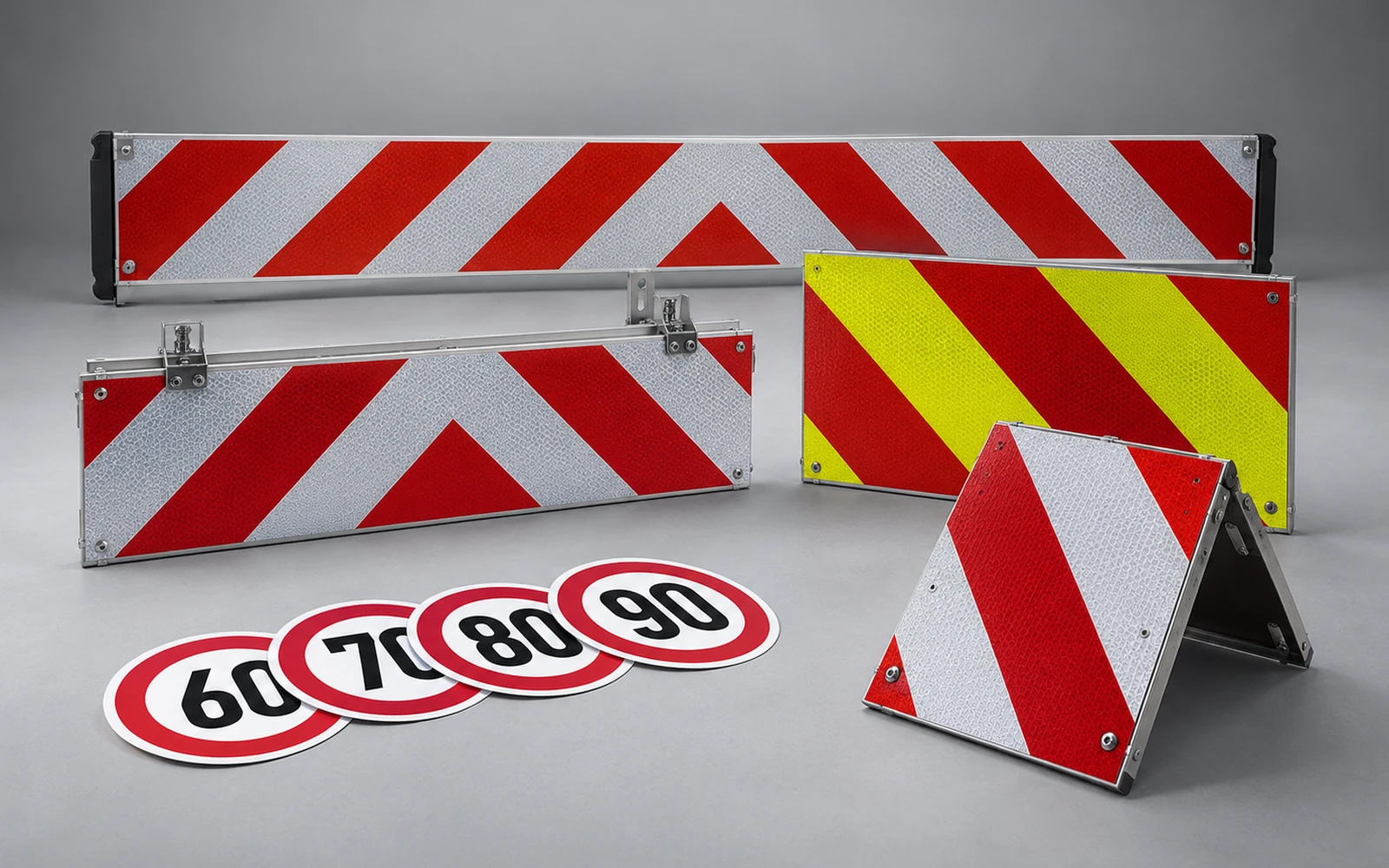
Panel size, rigidity, mounting position and resistance to vibration matter as much as the reflective pattern itself. The warning board should not interfere with ramps, hydraulic equipment or loading hardware and should remain stable and readable during operation.
Reflite can guide product selection according to the rear structure and intended use of the vehicle. Any route-, load- or dimension-specific legal marking requirement should be checked separately from the relevant operating documentation before ordering.
Common technical questions about product selection, surfaces and application.
The location depends on rear vehicle geometry, ramps, hydraulic equipment and loading hardware; the panel should not be obstructed.
A high-contrast reflective layout helps the rear area of a lowbed vehicle remain easier to identify in low-light conditions.
No. Vehicle structure, available mounting area and any operational or legal requirements can affect the correct size.
Share the vehicle, surface, dimensions and use case so we can narrow down the right product.