
What should be considered in tanker ADR marking?
Orange plates, hazard placards, UN information, tanker compartments and mounting positions should be evaluated as one transport-specific marking system.
Tanker and tank-vehicle marking requires more planning than a simple flat trailer application because the vehicle shape, equipment and cargo information all affect the available mounting areas. Orange ADR plates, UN-number panels, hazard class placards and reflective vehicle markings may appear together in different positions on the same tanker.
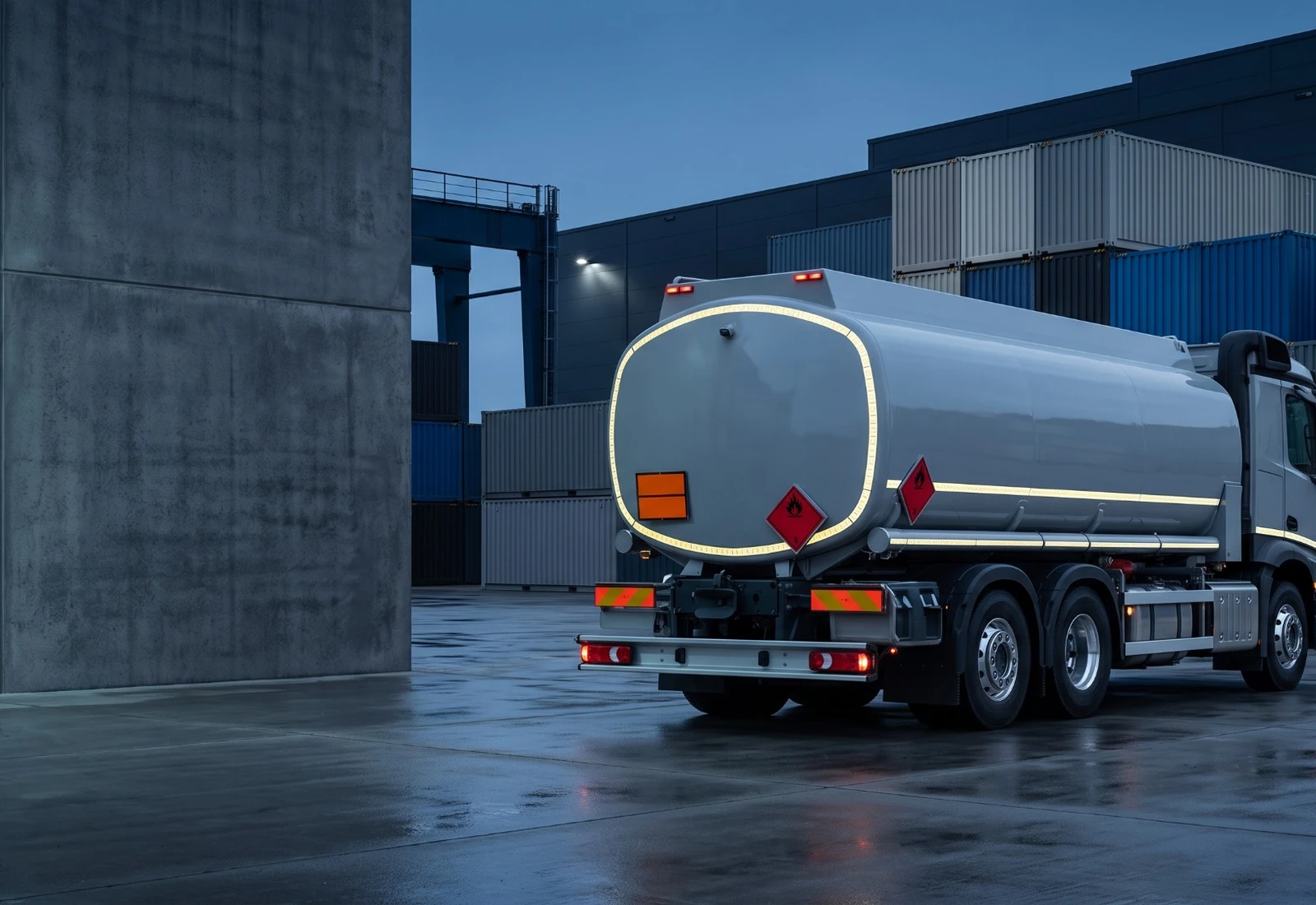
Cylindrical tank surfaces, chassis areas, rear equipment and ladders create different mounting conditions. The sign should remain readable, avoid mechanical interference and, where necessary, use a folding or changeable construction that matches the operating need.
The transported substance determines the relevant hazard class and UN identification. Reflite supplies the physical marking products, while the actual symbol, number and placement should be confirmed from the transport documentation before installation.
Common technical questions about product selection, surfaces and application.
Orange plates, hazard placards, UN information, tanker compartments and mounting positions should be evaluated as one transport-specific marking system.
Not necessarily. When the carried substance changes, the required number and hazard markings may also change; transport documentation is the reference.
A folding system can be practical where markings need to be covered or changed between different operating scenarios.
Tanker ADR Marking Plate for dangerous goods vehicle marking applications.
View product →ADR Orange Plate for dangerous goods vehicle marking applications.
View product →UN Number ADR Plate for dangerous goods vehicle marking applications.
View product →Share the vehicle, surface, dimensions and use case so we can narrow down the right product.